


About
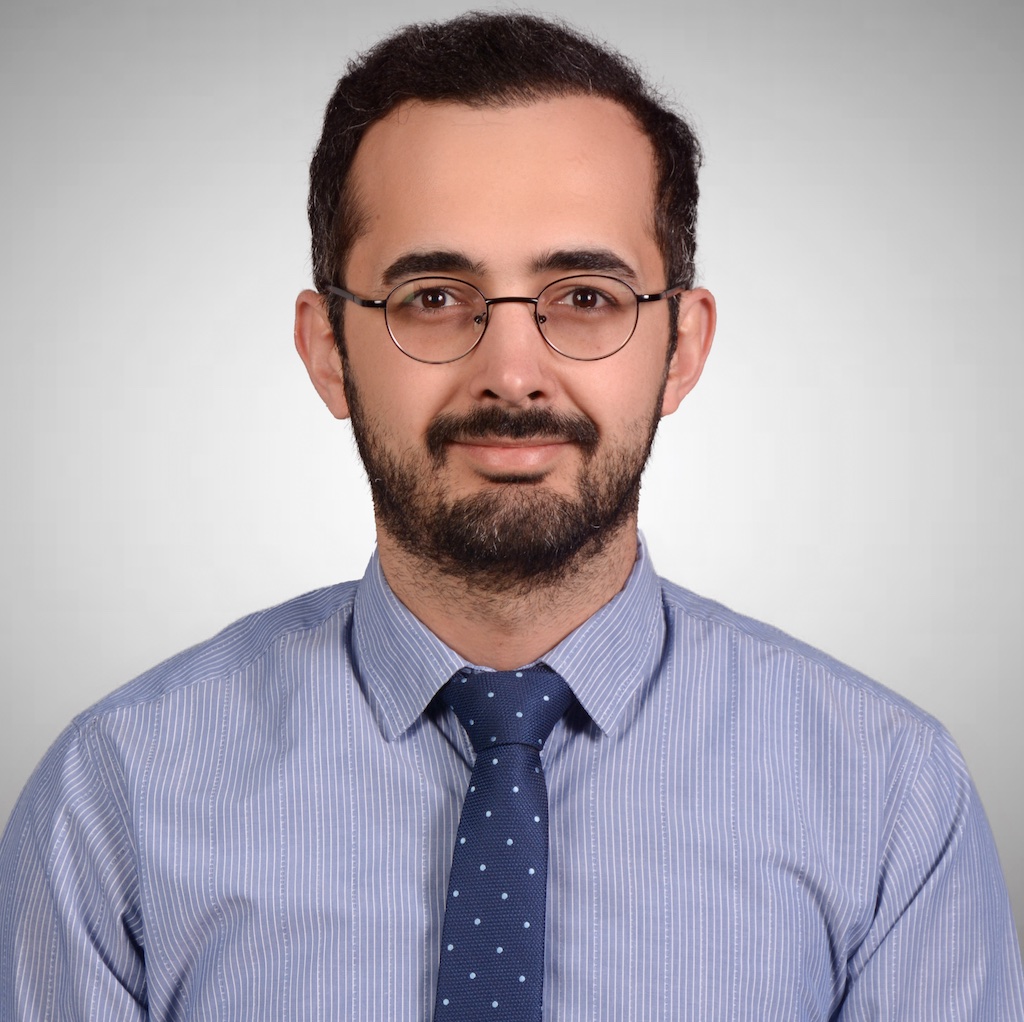
I’m an assistant professor in English language teaching at the Department of Foreign Language Education, Muş Alparslan University, Türkiye. I’m currently an academic visitor at Cardiff University, UK, working as a Turkish language tutor within the Languages for All programme. My research interests include corpus linguistics, formulaic language, speech fluency, teacher education, and teaching Turkish to speakers of other languages. I am also deeply interested in traditional Turkish theatre. I am a professional theatre artist with KUKA Sahne, a local theatre based in Muş, where I trained to become a ‘Hayali’ (a master puppeteer of Turkish shadow play). I performed in numerous traditional plays, children’s theatre, and full-length stage productions.
Work
2026 — Now
Turkish Language Tutor (Visiting Academic)
Languages for All
Cardiff University
Cardiff, Wales, UK
2018 — Now
Assistant Professor
Department of Foreign Language Education
Muş Alparslan University
Muş, Türkiye
2024 — 2025
Visiting Researcher
Department of Literature, Media & Language
Swansea University
Swansea, Wales, UK
2011 — 2018
Research Assistant
Department of Foreign Language Education
Anadolu University
Eskişehir, Türkiye
2010 — 2011
Research Assistant
Department of Foreign Language Education
Muş Alparslan University
Muş, Türkiye
2007 — 2010
IT Assistant
Kuter Publishing and Presentation Services
Bursa, Türkiye
Education
2014 — 2018
PhD in English Language Teaching
Anadolu University, Türkiye
2011 — 2014
MA in English Language Teaching
Anadolu University, Türkiye
2006 — 2010
BA in English Language Teaching
Uludağ University, Türkiye
Certificates
2023
Teaching Turkish as a Foreign Language
İstanbul University-Cerrahpaşa, Türkiye
2023
Creating and Implementing Online Courses
Arizona State University (Online)
2021
TESOL Certificate: Advanced Practitioner
TESOL International Association (Online)
Selected Publications
Öztürk, Y. & Taşçı, S. (2023). A Corpus-Based Analysis of Lexical Bundles in Non-Native Post Graduate Academic Writing and a Potential L1 Influence. rEFLections, 30(2), 488-505.
Öztürk, Y. (2023). Using Corpora to Inform Language Teaching Materials. In G. Subaşı (Ed.), Course Content Design and Materials Development in ELT (pp. 355-383). Eğiten Publishing.
Taşçı, S. & Öztürk, Y. (2021). Post-predicate that-clauses controlled by verbs in native and non-native academic writing: A corpus-based study. Australian Journal of Applied Linguistics, 4(1), 18-33.
Öztürk, Y. & Durmuşoğlu Köse, G. (2021). “Well (er) you know …”: Discourse markers in native and non-native spoken English. Corpus Pragmatics, 5, 223-242.
Öztürk, Y., & Durmuşoğlu Köse, G. (2016). Turkish and native English academic writers’ use of lexical bundles. Journal of Language and Linguistic Studies, 12(1), 149-165.
Selected Presentations
Öztürk, Y., & Barbieri, F. (2025). Exploring p-frames in university students’ talk: Variation, predictability, and discourse functions. Corpus Linguistics 2025 Conference, Birmingham, United Kingdom.
Barbieri, F., & Öztürk, Y. (2025). Lexical bundles and speech fluency in British and international university students’ talk. Corpus Linguistics 2025 Conference, Birmingham, United Kingdom.
Öztürk, Y., & Barbieri, F. (2025). Lexical bundles and speech fluency in L1 and L2 English: The case of Turkish EFL learners. LxGr 2025 (10th Symposium on Corpus Approaches to Lexicogrammar), Edge Hill University, United Kingdom (Online).
Öztürk, Y., & Öztürk, S. Y. (2023). (er) .. when we at school: A Corpus-Based Analysis of Errors and Speech Fluency. Corpora In Language Learning, Translation and Research Conference 2023, Zadar, Croatia.
Öztürk, Y. (2023). Podcasting as a Supplementary Activity for Speaking Practice in Emergency Distance Education. 3rd ILTERG Conference, Nevsehir, Türkiye.
Öztürk, Y., Yeşilçınar, S. & Öztürk, S. Y. (2022). Lexical Bundles in EFL Academic Writing and a Potential L1 Influence in a Developmental Learner Corpus. American Association for Applied Linguistics (AAAL) Conference 2022, Pittsburgh, Pennsylvania, USA.
Öztürk, Y. & Durmuşoğlu Köse, G. (2019). The use of discourse markers in informal interviews with Turkish and British university students: An analysis of frequency and functions. American Association for Applied Linguistics (AAAL) Conference 2019, Atlanta, Georgia, USA.
Öztürk, Y. (2016). Lexical bundles in L1 and L2 English, and L1 Turkish. American Association for Applied Linguistics (AAAL) Conference 2016, Orlando, Florida, USA. (Poster Presentation)
Öztürk, Y. & Durmuşoğlu Köse, G. (2014). As a result of: Lexical bundle use of Turkish and native English writers. American Association for Applied Linguistics (AAAL) Conference 2014 Conference, Portland, Oregon, USA.
Selected Projects
Researcher (Postdoctoral Project): Corpus-Based Analysis of Lexical Bundles and Speech Fluency in L1 and L2 English.
Swansea University, UK. Supervisor: Dr. Federica Barbieri
Coordinator (Project funded by US Embassy, Ankara): Play & Learn English!: Gamifying Language Teaching and Designing Game-Based Language Activities.
Researcher (Project funded by Anadolu University, Türkiye):
Creating a Trilingual (Turkish-English-German) Term Base to Ensure Standardisation in the Institutional Translations of Anadolu University.